CP3 Overview
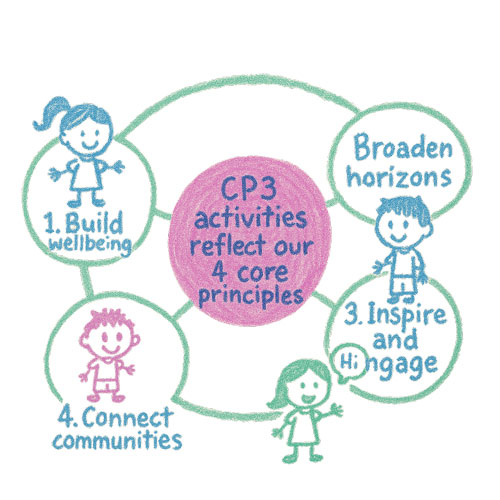
At the heart of CP3 are four key principles—co-designed with children, educators, and their OSHC communities. Every CP3 activity brings these principles to life in a way that’s unique, local, and loads of fun.
No two programs look the same—because they’re shaped by the voices, strengths, and creativity of each community. That’s the power of co-design. That’s the heart of CP3.

Want to see CP3 in action?
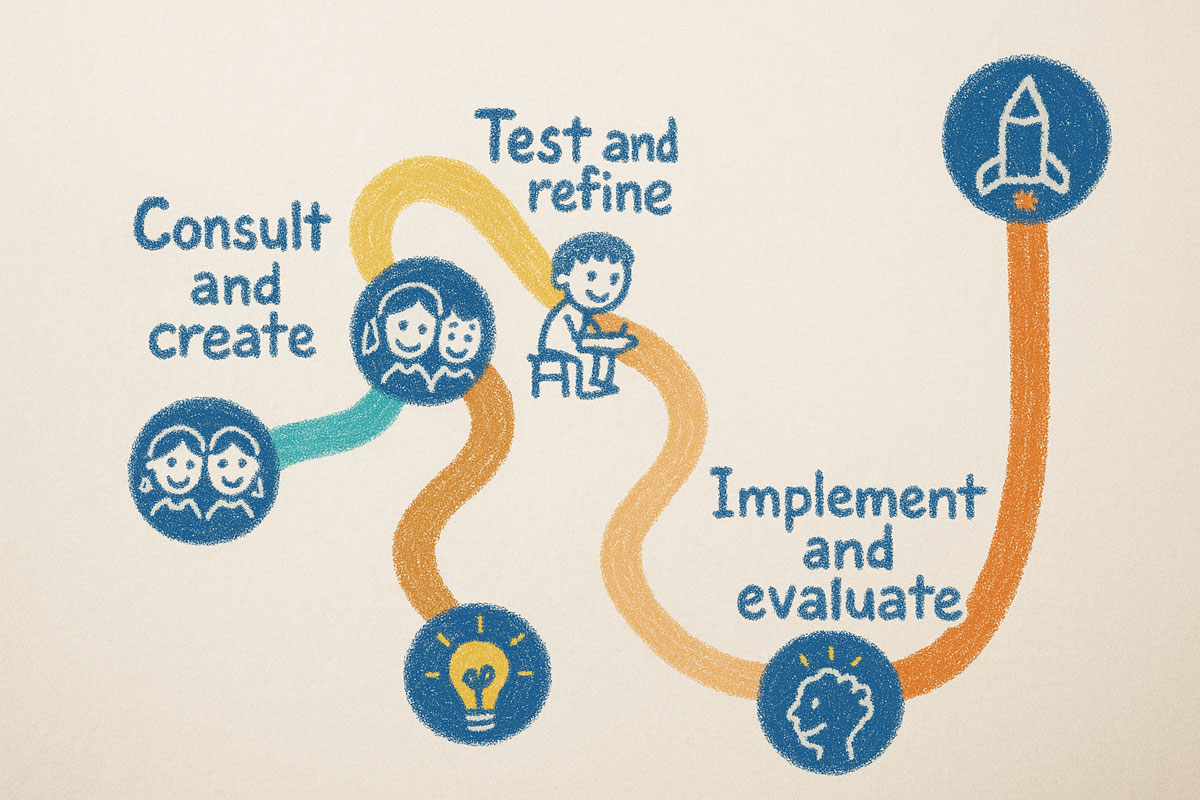
It guides you through three simple phases—from your first spark of an idea all the way to implementation and evaluation.
Real, Measurable Outcomes
CP3 helps your OSHC community co-design activities that reflect children’s ideas, strengths, and needs.
Consult & Co-Create
Work with your OSHC community to gather insights, listen to children’s voices, and collaboratively shape your activity concept.
Test & Refine
Try out your activity ideas, explore what works well, and identify opportunities to strengthen or adapt them.
Implement & Evaluate
Deliver your full CP3 activity and continue reflecting, gathering feedback, and tracking the impact on participation, inclusion, and wellbeing.
The Heart of CP3
Core Principles

Build Wellbeing
Grow children's social, emotional, cognitive and physical wellbeing and resilience.
Connect Communities
Promote connectedness, communication and belonging – forging strong links with peers, families and communities

Broaden Horizons
Offer a diverse range of enriching experiences – opening doors to opportunities children might not otherwise encounter at OSHC.

Inspire & Engage
Create a spark through activities that are exciting, meaningful and promote children's leadership, decision making and choice.
The heart of CP3
Co-Production
Evidence-based co-production
Through our evidence-based co-production processes we have built a program together that enables children to lead in OSHC activities that promote these principles, every step of the way.
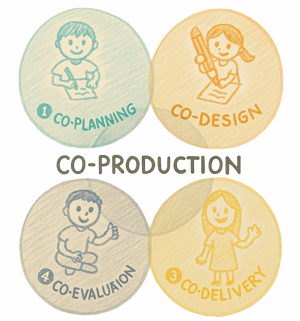
Co-production sits at the heart of CP3. It ensures children are not just consulted but meaningfully involved in shaping the activities that support their wellbeing. In CP3, co-production follows four simple, practical stages:
Co-Plan
Children help identify what matters to them. Through simple activities like Dream Walls, discussions, drawings, or idea stations, they contribute to planning the focus and goals of your CP3 activity.
Co-Design
Children are active partners in creating the activity. They help choose themes, design experiences, and develop solutions in ways that are fun, inclusive, and developmentally appropriate.
Co-Deliver
Children take on small leadership roles—announcing activities, helping set up, welcoming others, or demonstrating parts of the program. These roles build confidence and reinforce peer-led wellbeing.
Co-Evaluate
Children reflect on what worked, what didn’t, and how the activity felt for them. Using child-friendly tools like voting activities, emojis, or short feedback prompts, their insights directly guide how CP3 grows and improves.
The CP3 Step by Step Guide
Next Step
CP3 Resources
Here you’ll find everything you need to deliver CP3 in your OSHC service.